|
|
汽车零部件采购、销售通信录 填写你的培训需求,我们帮你找 招募汽车专业培训老师
RCR车身结构汽车外语
If it's true people are the product of their environment, then what would you expect from someone who grew up in Indianapolis and never attended a 500-mile race? Most could agree it would just be sacrilegious! But in England, the same could be said for those in close proximity to the Isle of Man, site of the world-famous TT motorcycle racecourse. As a young man Fran Hall grew up in the pits of the famous track, and he would eventually immerse himself in all of that racing action, eventually trying his hand at Grand Prix-style motorcycle racing himself.
The knowledge one picks up by being on the upper levels of racing technology served Fran well. After moving to Detroit, Fran got a job as a development technician for General Motors, working in engine development, including the Ecotec program. He then left GM for GM, or at least their GM Racing division, with an eye on their Indy car program and prototypes destined for Daytona. Heady stuff for a guy still in his 30s, but when you have a passion for racing as well as an appreciation for design, then what else are you going to do? When he was 36, Fran decided to pursue his love of both design and racing by forming Race Car Replicas (RCR) in 2004. Fran felt there was a need for high-quality '60s-era race car replicas at an affordable level.
The first problem he ran into was how to get the parts and pieces made to professional standards without the astronomical cost. But since he was located in Fraser, Michigan (just outside Detroit), he was able to find some talented craftsmen who worked for the Big Three and the aerospace industry during the day, but were willing to accept smaller jobs (like RCR's) during lulls in their regular manufacturing schedule.
But the big break for Fran was when he developed a new way to look at the chassis configurations of the vehicles he wanted to build. Chassis construction is among the highest-cost factors in replica car building, but Fran used his design and race knowledge to move away from a tube-frame construction to an aluminum monocoque. Building the chassis on a monocoque design allowed Fran to create a very sturdy base (great for race cars). By having the panel cutting done by water jet and the panel shaping done on a CNC machine, Fran was able to create a precision piece to be replicated at a low cost.
The parts are jig-assembled, tacked, then welded together to produce an incredibly rigid and strong base on which to build the rest of the car. Each car starts with roughly 850 pounds of billet aluminum yielding roughly 450 pounds of precision parts (there is a maximum .010 tolerance for everything on the car). With the car completely assembled, uprights in place, wheels on, interior in, and a small-block Ford engine installed, the total weight of a car such as the RCR 40 (a GT40 clone that comes in Mk I, Mk II, or Mk IV body styles) comes in around 2,200 pounds. Bolt up an 800-horse twin-turbo V-8 and you're going to have a lot of fun!
The RCR facility is roughly 7,500 square feet and reserved mostly for assembly. Other smaller shops around the Detroit area do Fran's fiberglass work, as well as some of RCR's machining, upholstery, and paint needs. For now, Fran offers the aforementioned GTs in three versions, an RCR-70 Mk IIIb coupe (a Lola T70 clone), a Ferrari P4 replica (only four originals ever existed), and a very accurate Porsche 917 copy (with molds taken directly from an original race-going 917).
And though the quality level is high, Fran can bring these kits to market for a lot less than you might think one should sell for. The base kit for an RCR-40 Mk I or Mk II is less than $25,000. It comes with the aluminum monocoque chassis, billet suspension uprights (front and rear), tubular rear suspension radius rod links, billet rear suspension control arms, billet upper and lower front control arms, and a complete body set (nose, tail, roof, doors, rocker panels, windshield, Lexan headlight covers, and side windows).
A Deluxe kit runs about $35,000, but arrives with a lot more goodies and as a roller. A Deluxe-Plus kit runs about $42,000 and includes a pedal assembly, an air-conditioning system, and even more accessories. A check of the RCR Web site (www.race-car-replicas.com) breaks down in detail what you get in all the various kits.
For the RCR-70, base kits can be put together for about $27,000, while a deluxe kit for a rolling RCR-70 will run about $37,000. The RCR P4 checks in at about $38,000, while the 917 project is still in development. At the recent Carlisle Kit Car Nationals, Hall unveiled the company's new RCR-P, a mid-engine two-seater built as a GTP-type racer that will accept almost any factory drivetrain from a front-wheel-drive setup as well as any four-, six-, or eight-cylinder engine configuration. The car is set up on a 105-inch wheelbase, so it will be a more substantial racer than some scaled-down clone-type car. All in all, Fran Hall has the best of every world at his fingertips. He produces high-quality components, has parts in stock (he advertises a 16-week delivery, but often fills the order and calls customers earlier than that), and is still passionate about the feeling you get when you take one of his vehicles down the street (and around a corner!). The lug nut hasn't fallen far from the toolbox from back when he was a boy in the race pits in England, and it's a contagious sensation Fran hopes everyone can enjoy! Look for his display of unique '60s race cars at various shows around the country, or check them out on the Web for more information.
汽车设计全过程概述
汽车基础知识 |
|

 |手机版|小黑屋|Archiver|汽车工程师之家
( 渝ICP备18012993号-1 )
|手机版|小黑屋|Archiver|汽车工程师之家
( 渝ICP备18012993号-1 )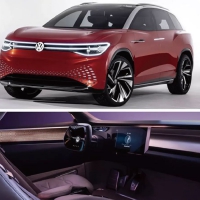 深度剖析 2019-2020 概念车设计趋势
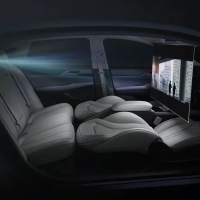 智能座舱演进的思考



 IP卡
IP卡 狗仔卡
狗仔卡 发表于 1-2-2007 19:25:50
 提升卡
提升卡 置顶卡
置顶卡 沉默卡
沉默卡 喧嚣卡
喧嚣卡 变色卡
变色卡 显身卡
显身卡