|
|
汽车零部件采购、销售通信录 填写你的培训需求,我们帮你找 招募汽车专业培训老师
本帖最后由 nizainali 于 9-3-2011 12:19 编辑
This technique is most characteristic of high combustion efficiency, economy, environmental protection, but also can enhance the engine's power output. Because in the lean-burn conditions, the stoichiometric mixture ignition conditions than difficult, it is even more violence is not prone to burning, so you can use a higher compression ratio designed to improve energy efficiency, combined with gasoline in excess full combustion of the air, so the support of these conditions can squeeze all the energy of each drop of gasoline.
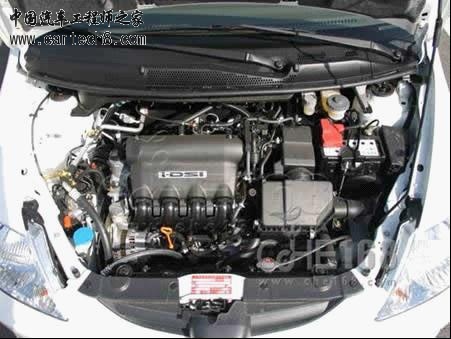
Honda's i-DSI lean-burn engine technology.
Honda uses the engine cylinder is relatively rare outside the lean-burn technology, although there is no direct injection of advanced, but the relative low cost in terms of direct injection engines.
The so-called lean-burn, is the mixture by increasing the engine air-fuel ratio, so that the mixture in the stoichiometric air-fuel ratio value greater than the state of combustion. Theoretical air-fuel ratio is a basic parameter of engine, general engine air-fuel ratio could not be changed, and if you want to achieve lean burn engines, it must meet two conditions: First, the lean-burn technology requires a strong ignition energy. The i-DSI engine uses twin spark plug design, can well meet this need. Second, the lean-burn gasoline technology needs air mixing matter sorted out. If the fuel can be mixed with air, when the spark plug ignition, when met in mixed heterogeneous mixture of gasoline with fewer parts, the ignition will be more difficult. Honda to use this engine design of the traditional 2-valve, so that more gasoline mixed with air opportunities. i-DSI engine is through these means to solve the basic needs of lean combustion to achieve lean combustion. The i-DSI is outside the ordinary cylinder fuel injection engine developed on the basis, so it is more focused on fuel economy, and for power output, then there is not much help. i-DSI engine through the burning of "a more dilute mixture" to the case of equal power output, burning less gasoline.
Mitsubishi GDI gasoline direct injection engines
people who are familiar with Mitsubishigenerally know GDI, Mitsubishi direct injection engine which is the abbreviation of technology, Mitsubishi has developed very early GDI engine, Mitsubishi's GDI engine through the lean burn technology that enables reduced fuel consumption 20% -35%, so that carbon dioxide emissions by 20%, while the output power is the same displacement engine than the average 10%. Lean-burn direct injection technology is a branch of technology. Direct injection technology has two major advantages: 1, the engine before the spark plug ignition in gasoline direct injection into the high pressure combustion chamber, while the precise control of the ECU, the stratified combustion gas mixture. 2, since gasoline is injected directly into the cylinder, the cylinder with the drive outside the jet compared to gas mixture does not require the damper, the damper can reduce the air resistance of mixed gases. If the gasoline direct injection into the cylinder and is bound to cause air and gasoline is not enough time to mix, this is not a mixture of gas, obviously can not meet the needs of the engine ignition. Direct injection engine is the first to solve this problem. Let's take a look at Mitsubishi is how to solve:
This figure is the GDI engine and conventional MPI engines with different structure:
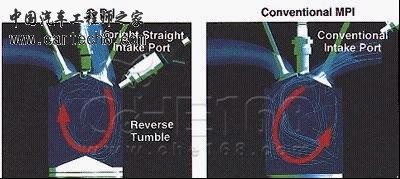
It can be seen from the chart, outside the ordinary cylinder injection engine is different, GDI uses the vertical intake manifold design, and designed a convex piston head shape. After using this design, when the piston during the compression stroke when the cylinder will form a strong vortex. At this point the gasoline direct injection into the combustion chamber is, this strong can make gasoline with the air vortex mixing, and thus solve the direct injection of fuel and air mix. GDI engine fuel injection process is divided into two stages, that is, two fuel injection.
Auxiliary fuel injection stage: running in the engine intake stroke, the engine will be repeated injection, the injection is the auxiliary fuel injection, fuel injection quantity is not, nor is the main purpose of fuel injection to ignition combustion. When a certain amount of gasoline in the intake stroke is injected into the cylinder, when this part of the small amount of gasoline will vaporize volatile, volatile liquid will vaporize and absorb heat, so you can reduce the temperature inside the cylinder. Lower the temperature inside the cylinder, the cylinder can hold the gas density will naturally increase. Therefore, the consequences of the injection to the cylinder in the cooling can also increase the intake density, so that more air into the cylinder, but also ensure a uniform mixture of gasoline and air.

The main injection phase: The second injection is the main fuel injection process. When the piston is about to reach the engine compression stroke top dead point, the spark plug ignition, before once again will have a certain amount of gasoline is emitted, the Pen She is to become the master Penyou. At this point, the concave side of the piston makes the mixture around the spark plug to form a high concentration region, the relatively denser mixture ignition in the case of spark plug ignition is smooth, while the more dilute the mixture around the region can not be direct flame is lit the spark plug, it can only burn after the success in the central region, while the energy produced by combustion ignited. As a result of the above design, GDI engine in the ultra-thin air-fuel ratio 40:1 under normal operation, and it's outside the cylinder air-fuel ratio than the ordinary jet engine air-fuel ratio is more dilute. The advantage is obvious, in this case of lean combustion, the combustion of fuel can be more fully, squeezing every drop of fuel can produce kinetic energy, at the same time, due to combustion, can greatly reduce the unburned gas discharged from the engine, resulting in lower emissions. GDI fuel injection in addition to achieving the sub-paragraphs other than the above-mentioned advantages, but also effectively reduce the generation of knock, which can use a higher compression ratio, get more power output. The first phase of the pre-injection gasoline evaporation can take a lot of the cylinder under the action of heat, reduce the cylinder temperature, so be very effective in decreasing the probability of detonation. Therefore, GDI engine can be used up to 12.5:1 compression ratio design to effectively improve the power output.
GDI nitrogen oxide emissions: While the GDI engine can reduce the overall pollution emissions, but also it has a very big disadvantage, that is, emissions of nitrogen oxides is very high. In order to reduce emissions of such pollutants, need to adopt targeted and effective device to ensure catalytic exhaust emissions meet the requirements of environmental protection department.
Renault IDE (Injection Direct Essence) direct-injection engine
for the Mitsubishi GDI engine defects in emissions, Renault has developed a better solution. IDE Renault engine is introduced in Europe its first direct injection engine, it uses a different design completely solve the problem of Mitsubishi GDI engine. IDE still uses the thin air and fuel mixture, but increased the amount of exhaust gas recirculation EGR valve. This technology can reduce fuel consumption, and effectively reduce the combustion temperature - which is that it effectively address the root causes of GDI engine emissions. Ordinary engines, including the above-mentioned GDI engine, in its normal work, the working environment within the cylinder at high temperature and pressure state exactly, so that air and fuel mixture after combustion gas mixture is easy to generate nitrogen oxides. This direct injection engine, the problem is particularly prominent. As the compression ratio direct injection engine is usually higher than the design, the engine cylinder pressure greater than normal, and thus more prone to nitrogen oxides. Can not reduce the pressure in the case (because of the high compression ratio is a necessary means to improve engine efficiency), to reduce nitrogen oxide emissions can only be by reducing the combustion temperature inside the cylinder. IDE engine EGR exhaust gas recirculation system, is discharged through a portion of the cylinder into the exhaust gas re-introduced into the trachea with the fresh air and fuel combustion to reduce combustion chamber temperature. Here to discuss in detail the working principle of EGR is well known, exhaust is no longer burning, the gas introduced into the cylinder to the equivalent of reducing the engine's displacement.
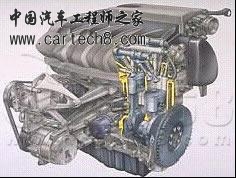
For example, if 10% of EGR gas introduced into the cylinder, it will account for 10% of cylinder volume, the volume of natural gas to leave the mixture to reduce by 10%, under the circumstances, it is equivalent to the engine's displacement will reduced by 10%. The EGR system is under the control of the ECU to work in full load condition, when, EGR system is not working. In ordinary conditions, EGR system will be activated. As a result, the engine matches the EGR system is equivalent to a variable displacement engine when you need high-powered big displacement engine, you can get enough power; in everyday driving, without excessive power When a small displacement engine, can get a better economy and lower emissions. Common engine equipped with EGR systems, they usually only 10% -15% of the gas utilization rate, because the introduction of too much gas will reduce the concentration of gas mixture, resulting in mixed gas is difficult to ignite. Renault IDE As a result of direct injection designed to introduce up to 25% of the exhaust gas recycling. So how to use IDE engine is 25% of the exhaust after the engine can guarantee the normal work? This is due to its direct injection system. Renault's IDE direct injection system and other direct-injection engine the biggest difference is that it's fuel injector arranged in the center of the cylinder head, is not an unusual arrangement of the spark plug location. The Siemens fuel injector can spray can spray a high pressure up to 100bar gasoline, gasoline directly into the combustion chamber in the air mixture. Around the spark plug and then mixed to form a very strong area, and its concentration can be enough to spark ignition, which can achieve 25% of the gas mixture. In addition to precision injection outside the normal engine fuel injection can only be treated as fog droplets, so the concentration of gasoline into the combustion chamber is the same, the results can not be formed around the spark plug doctrinal areas. IDE engine in different conditions, divided into three adjusting the amount of exhaust gas recirculation EGR. In full load conditions, without introducing the combustion gas, so to the greatest degree of access to power output, in which case the conditions and Mitsubishi's GDI is the same. Although this time the engine is also working at full capacity, fuel consumption is relatively large, but still compared with the conventional engine to reduce fuel consumption by 16%. Through these techniques, a 1998CC engine displacement of IDE can output 140 power and 200 Nm of torque. Although the displacement is not equipped with the same IDE, but with a variable valve timing system of the engine, but also the power output of 140, but it can only output 188 Nm of torque. |
|

 |手机版|小黑屋|Archiver|汽车工程师之家
( 渝ICP备18012993号-1 )
|手机版|小黑屋|Archiver|汽车工程师之家
( 渝ICP备18012993号-1 ) 深度剖析 2019-2020 概念车设计趋势
 智能座舱演进的思考




 IP卡
IP卡 狗仔卡
狗仔卡 发表于 9-3-2011 12:02:42
 提升卡
提升卡 置顶卡
置顶卡 沉默卡
沉默卡 喧嚣卡
喧嚣卡 变色卡
变色卡 显身卡
显身卡