|
|
汽车零部件采购、销售通信录 填写你的培训需求,我们帮你找 招募汽车专业培训老师
Comparison of Seat System Resonant Frequency Testing Methods
A seat system developed without an accurate structural dynamics model has a higher probability of squeaks, rattles, excessive seat back motion, and poor ride characteristics. If these issues are not addressed during development testing and are allowed to go into production, engineering changes are more costly and difficult to implement. Because today’s seat systems are more complex, engineers must use the latest technology to determine the seat system response characteristics.
Modal analysis is the process of developing a dynamic model of a structure or a mechanical system which will be used for problem solving and trouble shooting, simulation, prediction,and optimization. The dynamic model is a set of modal parameters consisting of natural frequencies, damping factors, and mode shapes. These parameters are based on the structure or system. Experimental modal analysis can use either time based, or frequency domain based measurements to calculate the modal parameters. This method provides the most thorough definition of the dynamic response characteristics of the isolated seating system.
Resonant Impact Analysis is used to determine the approximate dynamic response of a seating system. This method provides frequency response functions which describe the natural frequencies of the system. Resonant impact analysis provides information quickly, but does not define the dynamic response characteristics as completely as modal analysis.
Multi-axis shaker table testing is another tool used to determine resonant frequencies in the seat system. The shaker table is able to input sine sweep and random inputs into the seating system. The amplitude of the sine sweep or random input can be controlled in acceleration or displacement control. The shaker table is also capable of simulating road conditions of a customer’s proving grounds in the laboratory. These roads generate loads in vehicle components such as seats. Controlled laboratory tests allow duplication of complex multi-channel time histories of a test specimen. The shaker table can reproduce road inputs in six degrees of freedom: vertical, lateral, longitudinal, pitch, roll, and yaw motions.
|
|

 |手机版|小黑屋|Archiver|汽车工程师之家
( 渝ICP备18012993号-1 )
|手机版|小黑屋|Archiver|汽车工程师之家
( 渝ICP备18012993号-1 )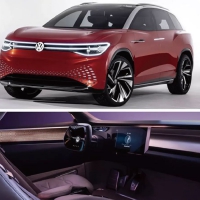 深度剖析 2019-2020 概念车设计趋势
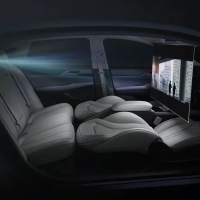 智能座舱演进的思考



 IP卡
IP卡 狗仔卡
狗仔卡 发表于 2-6-2011 18:00:17

 提升卡
提升卡 置顶卡
置顶卡 沉默卡
沉默卡 喧嚣卡
喧嚣卡 变色卡
变色卡 显身卡
显身卡
